Does it?
Do you still draw yourself to Him? Or are you hiding? You know, we do that sometimes... when Christianity becomes a systemic routine which we follow blindly... it becomes more of a chore, a duty rather than something we would have gladly done willingly... like for a lover.
The "coolness" of being tagged a Christian and "God, I never want to out of Your Love ever again" promise are being replaced by 'no one attends service with me', 'it's too far and too early anyway', 'i feel tired all the time'. Whenever we hit a peak, the trough is waiting. We are sick of politics in church. Church people are waaayyy too "artificially" nice. Our faith turns cold. We don't "feel" Him around when He's needed. We no longer communicate with Him in all honesty and openness. We don't pray as often. Sermons no longer speak to us. The "same-old, same-old" is a drag. Somehow, His Amazing Grace is not so amazing after all. Or is it?
~ Your grace still amazes me ~
~ Your love is still a mystery ~
My faithful Father, enduring Friend
Your tender mercy’s like a river with no end
It overwhelms me, covers my sin
Each time I come into Your presence
I stand in wonder once again
::Chorus::
Your grace still amazes me
Your love is still a mystery
Each day I fall on my knees
Your grace still amazes me
‘Cause Your grace still amazes me
Oh, patient Saviour, You make me whole
You are the Author and the Healer of my soul
What can I give You, Lord, what can I say
I know there’s no way to repay You
Only to offer You my praise
It’s deeper, it’s wider
It’s stronger, it’s higher
It’s deeper it’s wider
It’s stronger, it’s higher
than anything my eyes can see
Tuesday, June 24, 2008

Flight of Your Life
What God teaches through faith's ups and downs
Ruth E. Van Reken
Life with jesus hasn't turned out quite the way I thought it would.
As a child, "testimony time" was my favorite feature of Sunday evening church. Each week the white-haired ladies and gentlemen around me would grab the pew ahead, pull themselves to a slightly stooped stand, and proclaim, "I accepted Jesus 40 years ago, and it's been glory ever since." I figured "glory" must be great, and couldn't wait to follow in their steps. I expected to soar through life with unswerving faith.
Instead of soaring, however, my faith journey has more closely resembled the flight of my first homemade kite: first rising, then dipping and crashing, so I'd have to start over again. Why couldn't I be more "spiritual" like those saints I'd known as a child?
I decided to study the Old Testament heroes listed in Hebrews 11 as members of the New Testament "hall of faith." At first, their stories puzzled me. How could God possibly put Jacob in that list? He'd stolen his brother's birthright through treachery. What about Samson? He spent his life chasing women such as Delilah. David had committed adultery and murder. None were people I'd choose as an example of faithful living. So why did God?
But as I read more carefully, I saw how those listed in Hebrews 11 shared a common story: God worked through their lives to shape them into individuals who trusted him despite seemingly impossible situations. Each experienced the same ups and downs of faith I knew so well, yet God used those events to build strong faith in him.
Why does God often seem to take us back to square one in our journey with him? What can we learn only when we have nothing left but God himself and his promises? Here are some answers.
Faith and feelings aren't the same. Throughout high school I promised God I'd follow him fervently, no matter what. God's presence seemed palpable as our school Bible club grew from 15 to 115 members. We prayed. God answered. It was great.
Soon after beginning college, however, I found myself seated alone in a dorm prayer room, wondering what had happened to God. The same Bible that had been savory meat for my soul now tasted like cold French fries. Prayers seemed to bounce off the walls with mocking echoes: "God isn't LISTENING … listening … listening." How could this be?
That's when I glanced up to see a plaque on the wall quoting a verse from Job 23: "I do not see him … but he knows the way that I take." I opened my Bible to read the whole chapter, and it described my situation perfectly. No matter where Job looked, he couldn't find God—yet God always knew where to find him. Based on that, Job determined to continue trusting God through the darkness.
That fact—that God knows where I am when I have no idea where he is—has been one of the most stabilizing truths in my life. I can pray, "God, I haven't a clue where you are in this mess, but I thank you that you know where I am. Please hold on to me when I can't seem to hold on to you."
God isn't a system to be learned. Following my first year in college, I went into a nursing program and worked with people in life-and-death situations. Seeing many of them face life's starkest moments without Jesus restored my faith — I knew I'd never doubt again.
Wrong. A few years later my husband, Dave, began his pediatric residency. We moved with our 8-month-old daughter to a new city where I didn't know one person. Dave took calls at the hospital every second or third night, and I became a stay-at-home mom. Depression set in. This time God didn't merely disappear; it felt as though he'd died.
I did what I'd done before. I asked God to keep his eyes on me when I didn't know how to find him. I read my Bible. I prayed. I even followed the advice of a book that promised if I'd praise God no matter what, all my problems would go away. I still felt awful.
Finally I confessed my struggle to a friend. "I'm sure if I'd only pray more or read my Bible more, I'd be okay, but I can't seem to do it like I should."
My friend gave me a strange look. "Did you hear what you just said, Ruth? If you do this or that exactly right, then God must perform according to your dictates. Why don't you ask God to be God in your life, and stop trying to control him?"
With that simple question, I realized while I'd always believed my salvation came by God's grace through faith in Jesus rather than through anything I could do, that's not how I lived. Instead, I'd started believing that if I just met certain standards of performance such as Bible reading and prayer (both good things in themselves), then God would essentially become my fairy godparent and do my bidding. My friend was right. I'd turned God's means for knowing him better into a method to keep control of my life.
Childish or immature perceptions of God need replacing. As a child I somehow picked up the skewed idea that really good soldiers in God's army barely notice the wounds they suffer while serving him, if they feel them at all.
Years later, Dave and I moved to Liberia, Africa, as missionaries. During our first year there, Uncle El, a fellow missionary, and his daughter, Rhoda, were in a terrible motorcycle accident. While Dave and I stayed with them all night at the hospital, robbers completely ransacked our home. Here we were, serving Jesus, and life had never been so catastrophic.
I knew I should pray — but how? For what?
I had no faith that Uncle El would survive and Rhoda already had multiple fractures. Finally, as I tried to pray, an amazing thing happened. Somehow, in a way I can't explain, I saw Jesus weeping in the Garden of Gethsemane the night before he was crucified. What an incredible paradox. There, in the midst of Christ's greatest act of faith, he suffered his greatest moment of pain.
Faith didn't prevent his pain, but pain also didn't prevent his faith.
By his Spirit, Jesus said to me, "Ruth, I know what it's like not to want the Father's will. Sometimes the Father's will is very hard. So I'm not going to push you through this; I'm going to carry you."
I've learned as I've matured that true faith not only acknowledges pain, but agrees to God's plan despite it. After Uncle El's death, Aunt Lois told me, "No reason is worth the price of my husband's life except one. Somehow God has allowed this to happen for his glory, though I may never understand why before heaven. With that, my heart can rest."
God's character is trustworthy. After my encounter with Jesus in the Garden, life continued to tumble from one crisis to another. We were robbed 9 more times. 5 close friends or relatives, including my father, died in the next 2 years. Just a few short years later, I had to face the biggest question of my life so far: "Have I given my life to God for a joke?"
My husband and I were living back in the States, but our 2 adopted Liberian sons, William and James, had returned to Liberia just before a civil war began there in 1990. For months, we had no idea if our sons were alive or dead. No matter how hard I prayed, the news got worse: "Cholera Sweeps the City." "600 Killed in Church Massacre." Even if I'd known where William and James were, I had no way to send help or rescue them. I felt numb inside. Each day I waited for a breakthrough from God. Each day—silence.
After many weeks, God finally impressed one thought in my heart: "Ruth, you've come to trust what you know about me, but you don't trust me."
That puzzled me. So I prayed, "God, I have no idea what that means, but if it's true, would you teach me about yourself from scratch, as if I've never known you at all?"
A few months later, still numb, I opened my Bible once more to Hebrews 11. In verse 6I read, "Without faith it is impossible to please God, because anyone who comes to him must believe that he exists and that he rewards those who earnestly seek him."
Do you really?! My mind began to rage at God as I compared that verse to the circumstances around me. I've sought you and sought you this year, but you remain silent, and everything I've prayed about has only gotten worse. You haven't rewarded me with one thing!
Hadn't we given up family, country, and professional opportunities to follow God? Now look. Because of the war in Liberia, our mission buildings had been destroyed and our two sons were likely dead and gone. Instead of a plentiful harvest, we had a sun-scorched land.
Had I, in fact, spent my life for nothing?
As I stared at the passage again, the Shepherd's voice popped up once more in my mind. Do you believe I'm faithful and true and good, not for what you see me do, but for who I am?
The greatest wrestling match of my life followed. If I said "Yes, God is faithful, true, and good," it meant I believed he was keeping his promises in this awful situation — even if I didn't understand why or how. It meant I had to trust him; I had to leave all my unanswered questions with him. That seemed like an impossible choice.
But if I decided "No, God isn't faithful," then I was saying God was a liar and none of his promises were true — including that Jesus is my Savior. In that case, my life was a joke and there was no point in continuing the deception. That seemed like a hopeless choice.
Thankfully, I finally bowed before God, trusting his character, whether William and James lived or died. In God's mercy, both of them survived the war, but many others didn't. However, like the stories in Hebrews 11, where some people were rescued from the lion's den while others were martyred by being sawn in 2, God is equally faithful, true, and good in all cases.
I once heard George Verwer, head of Operation Mobilization, say, "Christians have to relearn their faith from scratch at every stage of life."
How true. And how wonderful that as God teaches us more about who he is within the circumstances of our life, our relationship to him becomes deeper and stronger. We can trust, no matter what we feel. Maybe that's the "glory" part after all.
Sunday, June 22, 2008
Take my Life & Let It Be
An old hymn written by Fanny Crosby (the blind woman of faith who penned "Blessed Assurance")
Performed by Chris Tomlin
As you listen the lyrics of this song... ask the Lord in what area am I struggling to surrender. It mentions so many areas in which can a challenge to for us to submit to God's will.
Do I give Him my hands and feet?
Do I only use my voice to to sing praises to my King or do I allow it to be used for satan's will?
Do my lips bring messages of love or of hate, of acceptance or of judgement?
Do I use the intellect He has given me to glorify Him or me?
Do I see the money I have as His or mine?
Who holds my heart, the world or Jesus?
Who does my life belong to and who do I submit to?
Take my life and let it be consecrated Lord, to thee
Take my moments and my days, let them flow in ceaseless praise
Take my hands and let them move at the impulse of thy love
Take my feet and let them be swift and beautiful for thee
Take my voice and let me sing always, only for my king
Take my lips and let them be filled with messages from thee
Take my silver and my gold not a might would I withhold
Take my intellect and use every power as you choose
::Chorus::
Here am I, all of me
Take my life, it's all for thee
Take my will and make it Thine it shall be no longer mine
Take my heart it is thine own; it shall be thy royal throne
Take my love, my Lord I pour at your feet its treasure store
Take myself and I will be ever, only all for thee,
Take myself and I will be ever, only all for thee
"Kept for the Master's Use" is a wonderful book written by Fanny Crosby (aka Frances Havergal). She uses lyrics from this hymn as chapter titles and it speaks to me every time I read this little paperback book that is so filled with godly wisdom that all of us need.
She encourages us to take every aspect of life and consecrate it for the Lord's use.
Why keep anything for self glorification when we can keep it all for His use?
May all of us be kept for the Master's use, alwayz!
Tuesday, May 20, 2008
《承諾》[China Sichuan Earthquake 12-May-2008]
《承諾》
多少人 多少幸福被搶奪
多少生活在一瞬間被埋沒
一切變沉默
淚光在眼眶閃爍
塵埃沾滿了失落 的輪廓(情願是我)
不必說 你們背後還有我
未來就是崎嶇也會陪你過
一個你 一個我
扛起不需要脆弱
前面越走一定會 越寬闊(你還有我)
* 誰都會有恐懼面對黑暗的角落
為了你我再苦也不躲
我要你重獲 原來的生活
認定了這一輩子的承諾
( repeat * )
** 縱然山搖地破 也要安然渡過 有你有我 **
( repeat * )
我要你重獲 原來的生活
認定了這一輩子的承諾
( repeat * )
Monday, April 21, 2008
Smoky Mountain Memories - David Archuleta
Beautifully sang....
You ought to go north somebody told us
Cause the air is filled with gold dust
And fortune falls like snow flakes in your hands
Now I don't recall who said it
But we'd lived so long on credit
And so we headed out to find our promised land
Just poor Smoky Mountains farm folk
With nothing more than high hopes
So we hitched our station wagon to a star
But our dreams all fell in on us
Cause there was no land of promise
Though it's a struggle just keepin' sight of who you are
Oh and these northern nights are dreary
And my southern heart is weary
As I wonder how the old folks are back home
But I know that they all love me
And I know they're all thinking of me
Smoky Mountains memories keep me strong
You know I've been thinkin' a whole lot lately
About what's been and what awaits me
It takes all I've got to give what life demands
You go insane if you give in to it
Life's a mill and I've been through it
I'm just thankful I'm creative with my hands
Oh and these northern nights are dreary
And my southern eyes are teary
As I wonder how the old folks are back home
But I'll keep leanin' on my Jesus
He'll love and guide and lead us
Smoky Mountains memories keep me strong
I'll keep looking to the father
Keep our heads above the water
Smoky Mountains memories keep me strong
Sunday, April 20, 2008
Thursday, April 17, 2008
Somewhere Over the Rainbow
Somewhere over the rainbow
Way up high
And the dreams that you dreamed of
Once in a lullaby ii ii iii
Somewhere over the rainbow
Blue birds fly
And the dreams that you dreamed of
Dreams really do come true ooh ooooh
Someday I'll wish upon a star
Wake up where the clouds are far behind me ee ee eeh
Where trouble melts like lemon drops
High above the chimney tops thats where you'll find me oh
Somewhere over the rainbow bluebirds fly
And the dream that you dare to
Dream really do come true oo ooo
Oh yes… dreams come true
Tuesday, April 15, 2008
Sunday, April 13, 2008
Christ Eyes
Fairest Lord Jesus
Fairest Lord Jesus, Ruler of all nature,
O Thou of God and man the Son,
Thee will I cherish, Thee will I honor,
Thou, my soul’s glory, joy and crown.
Fair are the meadows, Fairer still the woodlands,
Robed in the blooming garb of spring;
Jesus is fairer, Jesus is purer,
O Thou of God and man the Son,
Thee will I cherish, Thee will I honor,
Thou, my soul’s glory, joy and crown.
Fair are the meadows, Fairer still the woodlands,
Robed in the blooming garb of spring;
Jesus is fairer, Jesus is purer,
Who makes the woeful heart to sing.
Beautiful Savior, Lord of all the nations,
Son of God and Son of Man.
Glory and honor, praise, adoration,
Now and forever more be Thine.
Friday, March 21, 2008
The BirdCage
A man was on the side of the road with a large birdcage.
A boy noticed that the cage was full of birds of many kinds.
"Where did you get those birds?" he asked.
"Oh, all over the place," the man replied. "I lure them with crumbs and pretend I'm their friend. Then when they are close, I net them and shove them into my cage.""And what are you going to do with them now?"
The man grinned, "I'm going to prod them with sticks, and get them really mad so they fight and kill each other. Those that survive, I will kill. None will escape."
The boy looked steadily at the man. What made him do such things? He looked into the cruel, hard eyes. Then he looked at the birds, defenseless, without hope.
"Can I buy those birds?" the boy asked. The man hid a smile, aware that he could be on to a good thing if he played his cards right.
"Well," he said hesitantly, "The cage is pretty expensive, and I spent a lot of time collecting these birds, I'll tell you what I'll do, I'll let you have the lot, birds, cage and all for 10 pounds and that jacket you're wearing."
The boy paused, 10 pounds was all he had, and the jacket was new and very special, in fact it was his prized possession. Slowly, he took out the 10 pounds and handed it over, then even more slowly he took off his jacket, gave it one last look then handed that over too.
He received the cage from the man. And then (well, you might have guessed it) he opened the door and let the birds go free.
------------------------------------------------------------------------------------
The Enemy of the world, Satan, was on the side of life's road with a very large cage.
The man coming towards him noticed that it was crammed full of people of every kind, young, old, from every race and nation.
"Where did you get these people?" the man asked.
"Oh, from all over the world," Satan replied. "I lure them with drink, drugs, lust, lies, anger, hate, love of money and all manner of things. I pretend I'm their friend, out to give them a good time, then when I've hooked them, into the cage they go."
"And what are you going to do with them now?" asked the man.
Satan grinned. "I'm going to prod them, provoke them, get them to hate and destroy each other; I'll stir up racial hatred, defiance of law and order; I'll make people bored, lonely, dissatisfied, confused and restless. It's easy. People will always listen to what I offer them and what's better, blame God for the outcome!"
"And then what?" the man asked.
"Those who do not destroy themselves, I will destroy. None will escape me."
The man stepped forward. "Can I buy these people from you?", he asked.
Satan snarled, "Yes, but it will cost you your life."
So Jesus Christ, the Son of God, paid for your release, your freedom from Satan's trap, with His own life, on the cross at Calvary. The door is open, and anyone, whom Satan has deceived and caged, can be set free.
"But God demonstrates His own love toward us, in that while we were yet sinners, Christ died for us." Romans 5:8
Sunday, March 09, 2008
The Search for Meaning
"He who has a why to live for can bear almost any how." Nietzsche
Sometimes in life we struggled to understand events that caused upheavals in our lives. Sudden deaths/chronic illnesses in the family, disappointment in exam results, unexpected loss of job/income, negative doctor's report and so on. If you're the religious type, you'll question why God allow bad things to happen to good people like yourself. We need to find a reason to justify our sufferings, and the truth is, more often than not, we won't find any. Do you deserve it? Well, maybe. Do you need it? Absolutely.
Man's Search for Meaning (was written in 9 successive days and first published anonymously in 1959; now has more than 12million copies in print) has riveted generations of readers and contain ideas that have the power to change a person's life, with its vivid descriptions of life in Nazi death camps and its poignant lessons for spiritual survival.
This book insists that life is meaningful and has a purpose and we must learn to see life as meaningful despite our circumstances and hardship.
Between 1942 - 1945, Austrian psychiatrist Viktor Frankl labored in 4 different camps including Auschwitz, while his parents, brother and pregnant wife perished. Based on his personal experience and stories of many of his patients and fellow comrades, Frankl argues that we cannot avoid suffering but we can choose how to cope with it, find meaning in it, and move forward with renewed purpose.
Frankl's theory - logotherapy, from the Greek word logos ("meaning") holds that our primary drive in life is not pleasure, as Sigmund Freud proposed, or a quest for power as Alfred Adler taught, but the discovery and pursuit of what we personally find meaningful.
"What man actually needs," Frankl wrote,"is not a tensionless state but rather the striving and struggling for a worthwhile goal, a freely chosen task... the call of a potential meaning waiting to be fulfilled by him."
In his book, Frankl poignantly described those prisoners who gave up on life, who had lost all hope for a future, were inevitably the first to die. They died less from the lack of food or medicine than from lack of hope, lack of something to live for. By contrast, Frankl kept himself alive by summoning up constant thoughts of his wife and the prospect of seeing her again and by dreaming of giving public lectures after the war about psychological lessons from the Auschwitz experience. Appearently, many prisoners who desperately wanted to live did die from diseases, gas chambers, mass grave executions etc. But Frankl's concern is less with the question of why most died than it is with the question of why anyone at all survived.
The greatest task for any person is to find meaning in his/her life. Frankl saw 3 possible sources for meaning:
1) in Work or Deed - doing something significant
2) in Love - experiencing something or encountering someone in his/her very own uniqueness
3) in Courage during hardship and pain
His most enduring insight: forces beyond your control can take away everything you possess except for one thing, your freedom to choose how you will respond to the situation. You cannot control what happens to you in life, but you can always control what you feel and do about what happens to you. As observed by Frankl during the years he was imprisoned at the concentration camps, Man can preserve a vestige of spiritual freedom, of independence of mind, even under extreme, inhuman conditions of psychic and physical stress.
A scenario from Arthur Miller's Incident at Vichy in which a professional man appeared before an Nazi soldier and showed him his credentials: university degrees, lettters of reference and so on. Then the Nazi asked him,"Is that everything you have?" The man nodded. The Nazi threw it all in the wastebasket and retorted,"Good. Now you've nothing." The man, whose self-esteem had always depended on the respect of others, is emotionally destroyed. Frankl argued that we're never left with nothing as long as we retain the freedom to choose how we will respond. The truth of Frankl's insights can be witnessed in our society today. Successful, wealthy businessmen who upon retirement, lost all zest for life. Their work had given their lives meaning. Often it was the only thing that had given their lives meaning and without it, they spent day after day sitting at home, depressed "with nothing to do".
Pursuit of Success
Frankl said,"Don't aim at success - the more you aim at it and make it a target, the more you're going to miss it. For success, like happiness cannot be pursued; it must follow, and it only does so as the unintended side-effect. In other words, as a by-product and not the end of one's dedication to a cause greater than oneself. Happiness must happen, same goes for success: you have to let it happen by not caring about it. I want you to listen to what your conscience commands you to do and go on to carry it out to the best of your knowledge. Then you will live to see that in the long-run - in the long-run I say! - success will follow you precisely because you had forgotten to think of it."
Choices
There were always choices to be made. Every single day, every hour offered the opportunity to make a decision, a decision which determined whether you would or would not submit to those powers which threatened to rob you of your very self, your inner values which determined whether or not you would become a plaything of circumstances, renouncing freedom and dignity.
In concentration camps, even though conditions such as lack of sleep, tiredness, insufficient food and various mental stresses may suggest that the inamtes are bound to react in certain ways, it becomes clear and conclusive that the sort of person the prisoner became was the result of an inner decision, and not the result of camp influences. Fundamentally, any man, even under such terrible circumstances, can decide what shall become of him -mentally and spiritually.
A man who allow himself to decline because he could not see ant future goal occupy himself with retrospective thoughts. His "provisonal existence" caused him to lose his hold on life; everything in a way became pointless. Such people forgot that often it is just such an opportunity to grow spiritually beyond himself. Instead of taking the camp's hardship as a test of their inner strength, they did not take their lives seriously and despised it as something of no consequence. They preferred to close their eyes and live in the past. The prisoner who had lost faith in the future - his future - was doomed. With his loss of belief in the future, he also lost his spiritual hold; he let himself decline and became subject to mental and physical decay. He simply gave up and nothing bothered him anymore. Life for such people has indeed become meaningless.
Most men at concentration camps believed that the real opportunities of life had passed. Yet in reality, there was an opportunity and a challenge. One could make victory of those experiences, turning life into a personal triumph, or one could simply ignore the challenge and simply vegetate, as did a majority of the prisoners. Frankl forced his thoughts when the suffering became overbearing, to seeing himself lecturing in a pleasant lecture room on the psychology of the concentration camp. All that oppressed him at the moment became objective, seen and described from the viewpoint of science. By this method, Frankl succeeded somehow in rising above the situation, above the sufferings of the moment, and he obseved them as if they were already of the past.
Those who know about the fighting spirit of dying men/women on hospital beds will understand the link between the state of mind of a man - his courage and hope, or the lack of them - and the state of immunity and that a sudden loss of hope and courage can have a deadly effect.
Meaning of Suffering
Suffering by itself holds no meaning; we give our suffering meaning by the way we respond to it.
Dostoevski said once,"There is only one thing that I dread: not to be worthy of my sufferings."
Suffering is an ineradictable part of life, even as fate and death. Without suffering and death, human life cannot be complete. The way in which man accepts his fate and all the suffering it entails gives him ample opportunity to add a deeper meaning to his life. He may remain courageous, dignified and unselfish. Or in the bitter fight for self-preservation, he may forget his human dignity and become no more than an animal. Here lies the chance for a man to either make use of or forgo the opportunities of attaining the moral values that a difficult situation may afford him. And this decides whether he is worthy of his sufferings or not.
We must never forget we may also find meaning in life even when confronted with a hopeless situation, facing a fate that cannot be changed. When we are no longer able to change a situation - like an incurable disease, we are challenged to change ourselves.
An example is cited of an elderly man consulted Frankl due to severe depression. He could not overcome the loss of his wife who had died 2 years ago. Frankl refrained from telling hm anything but instead confronted him with this question,"What would have happened if you've died first and your wife would have had to survive you?" "Oh,"he replied,"for her this would have been terrible; how she would have suffered!" Whereupon Frankl said,"You see, such a suffering has been spared for her, and it was you who have spared her this suffering - at the price that you have to survive and mourn her." He said no word but shook Frankl's hand and calmly left his office.
In some way, suffering ceases to be suffering at the moment it finds a meaning, such as the meaning of a sacrifice.
Meaning of Life
"He who has a why to live for can bear almost any how." Nietzsche
Whenever there was a chance, one had to give them a why - an aim - for their lives, in order to strengthen them to bear the terrible how of their existence. Woe to him who saw no more sense in his life, no aim, no purpose, and thus no point in carrying on. He was soon lost. A typical response to encouragment,"I've nothing to expect from life anymore." What sort of answer can one give to that?
What really needed was a fundamental change in out attitude toward life. It did not really mater what we expected from life, but rather what life expected of us. We need to stop asking abotu the meaning of life, and instead to think of ourselves as those who were questioned by life - daily. Our answer must consist, not in talk, but in right action and conduct. Life ultmately means taking the responsibility to find the right answer to its problems and to fulfil tasks which it constantly sets for each person. These tasks, thus meaning of life, differ from man to man, from moment to moment. It's impossible to define meaning of life in a general way. These tasks form man's destiny, which is different and unique for each person. No man and no destiny can be compared with any other man or destiny. Sometimes the situation warrants a man to shape his fate by taking a step of action. Other times, it's advantageous for him to accept fate, to bear his cross. When a man finds that it is his destiny to suffer, he will have to accept his suffering as his task; his single and unique task. He will have to acknowledge the fact that even in suffering he is special and alone. No one can suffer in his place. His unique opportunity lies in the way in which he bears his burdens.
Everyone has his own specific vocation or mission in life to carry out a concrete assignment which demands fulfilment. Therein he cannot be replaces, nor can his life be repeated. Thus everyone's task is as unique as his opportunity to execute it. Ultimately man should not ask what the meaning of his life is, but rather recognize it is he himself who is asked. In other words, each man is questioned by life, and he can only answer to life by answering for his life; to life he can only respond by being responsible.
The true meaning of life is to be discovered in the world, rather than within man or his own psyche, as though it was a closed system. The more one forgets himself - by giving himself to a cause to serve or another person to love - the more human he gets and the more he actualizes himself.
Sometimes in life we struggled to understand events that caused upheavals in our lives. Sudden deaths/chronic illnesses in the family, disappointment in exam results, unexpected loss of job/income, negative doctor's report and so on. If you're the religious type, you'll question why God allow bad things to happen to good people like yourself. We need to find a reason to justify our sufferings, and the truth is, more often than not, we won't find any. Do you deserve it? Well, maybe. Do you need it? Absolutely.
Man's Search for Meaning (was written in 9 successive days and first published anonymously in 1959; now has more than 12million copies in print) has riveted generations of readers and contain ideas that have the power to change a person's life, with its vivid descriptions of life in Nazi death camps and its poignant lessons for spiritual survival.
This book insists that life is meaningful and has a purpose and we must learn to see life as meaningful despite our circumstances and hardship.
Between 1942 - 1945, Austrian psychiatrist Viktor Frankl labored in 4 different camps including Auschwitz, while his parents, brother and pregnant wife perished. Based on his personal experience and stories of many of his patients and fellow comrades, Frankl argues that we cannot avoid suffering but we can choose how to cope with it, find meaning in it, and move forward with renewed purpose.
Frankl's theory - logotherapy, from the Greek word logos ("meaning") holds that our primary drive in life is not pleasure, as Sigmund Freud proposed, or a quest for power as Alfred Adler taught, but the discovery and pursuit of what we personally find meaningful.
"What man actually needs," Frankl wrote,"is not a tensionless state but rather the striving and struggling for a worthwhile goal, a freely chosen task... the call of a potential meaning waiting to be fulfilled by him."
In his book, Frankl poignantly described those prisoners who gave up on life, who had lost all hope for a future, were inevitably the first to die. They died less from the lack of food or medicine than from lack of hope, lack of something to live for. By contrast, Frankl kept himself alive by summoning up constant thoughts of his wife and the prospect of seeing her again and by dreaming of giving public lectures after the war about psychological lessons from the Auschwitz experience. Appearently, many prisoners who desperately wanted to live did die from diseases, gas chambers, mass grave executions etc. But Frankl's concern is less with the question of why most died than it is with the question of why anyone at all survived.
The greatest task for any person is to find meaning in his/her life. Frankl saw 3 possible sources for meaning:
1) in Work or Deed - doing something significant
2) in Love - experiencing something or encountering someone in his/her very own uniqueness
3) in Courage during hardship and pain
His most enduring insight: forces beyond your control can take away everything you possess except for one thing, your freedom to choose how you will respond to the situation. You cannot control what happens to you in life, but you can always control what you feel and do about what happens to you. As observed by Frankl during the years he was imprisoned at the concentration camps, Man can preserve a vestige of spiritual freedom, of independence of mind, even under extreme, inhuman conditions of psychic and physical stress.
A scenario from Arthur Miller's Incident at Vichy in which a professional man appeared before an Nazi soldier and showed him his credentials: university degrees, lettters of reference and so on. Then the Nazi asked him,"Is that everything you have?" The man nodded. The Nazi threw it all in the wastebasket and retorted,"Good. Now you've nothing." The man, whose self-esteem had always depended on the respect of others, is emotionally destroyed. Frankl argued that we're never left with nothing as long as we retain the freedom to choose how we will respond. The truth of Frankl's insights can be witnessed in our society today. Successful, wealthy businessmen who upon retirement, lost all zest for life. Their work had given their lives meaning. Often it was the only thing that had given their lives meaning and without it, they spent day after day sitting at home, depressed "with nothing to do".
Pursuit of Success
Frankl said,"Don't aim at success - the more you aim at it and make it a target, the more you're going to miss it. For success, like happiness cannot be pursued; it must follow, and it only does so as the unintended side-effect. In other words, as a by-product and not the end of one's dedication to a cause greater than oneself. Happiness must happen, same goes for success: you have to let it happen by not caring about it. I want you to listen to what your conscience commands you to do and go on to carry it out to the best of your knowledge. Then you will live to see that in the long-run - in the long-run I say! - success will follow you precisely because you had forgotten to think of it."
Choices
There were always choices to be made. Every single day, every hour offered the opportunity to make a decision, a decision which determined whether you would or would not submit to those powers which threatened to rob you of your very self, your inner values which determined whether or not you would become a plaything of circumstances, renouncing freedom and dignity.
In concentration camps, even though conditions such as lack of sleep, tiredness, insufficient food and various mental stresses may suggest that the inamtes are bound to react in certain ways, it becomes clear and conclusive that the sort of person the prisoner became was the result of an inner decision, and not the result of camp influences. Fundamentally, any man, even under such terrible circumstances, can decide what shall become of him -mentally and spiritually.
Provisional Existence
Life at a concentration camp could be termed "provisional existence of unknown limit". Prisoners testified that the most depressing influence of all was that one could not know how long his term of imprisonment would be. The Latin word finis has 2 meanings: the end or the finish and a goal to reach. A man who could not see the end of his "provisional existence" was not able to aim an an ultimate goal in life. So he ceased living for the future, in contrast to a man leading a normal life. Thus the whole structure of his inner life changes; signs of decay set in. Similarly an unemployed worker finds himself in the same predicament. His existence become provisional and in a certain sense he cannot live for the future or aim at a goal. Research done on unemployed miners discovered that they suffer from a peculiar sort of deformed time - inner time - which resulted from their unemployed status. Prisoners too, suffer from this strange "time-experience". A day filled with hourly tortures and labour, appeared endless while a larger time unit - a week seemed to pass very quickly. Seems paradoxical in their "time-experience".
A man who allow himself to decline because he could not see ant future goal occupy himself with retrospective thoughts. His "provisonal existence" caused him to lose his hold on life; everything in a way became pointless. Such people forgot that often it is just such an opportunity to grow spiritually beyond himself. Instead of taking the camp's hardship as a test of their inner strength, they did not take their lives seriously and despised it as something of no consequence. They preferred to close their eyes and live in the past. The prisoner who had lost faith in the future - his future - was doomed. With his loss of belief in the future, he also lost his spiritual hold; he let himself decline and became subject to mental and physical decay. He simply gave up and nothing bothered him anymore. Life for such people has indeed become meaningless.
Most men at concentration camps believed that the real opportunities of life had passed. Yet in reality, there was an opportunity and a challenge. One could make victory of those experiences, turning life into a personal triumph, or one could simply ignore the challenge and simply vegetate, as did a majority of the prisoners. Frankl forced his thoughts when the suffering became overbearing, to seeing himself lecturing in a pleasant lecture room on the psychology of the concentration camp. All that oppressed him at the moment became objective, seen and described from the viewpoint of science. By this method, Frankl succeeded somehow in rising above the situation, above the sufferings of the moment, and he obseved them as if they were already of the past.
Those who know about the fighting spirit of dying men/women on hospital beds will understand the link between the state of mind of a man - his courage and hope, or the lack of them - and the state of immunity and that a sudden loss of hope and courage can have a deadly effect.
Meaning of Suffering
Suffering by itself holds no meaning; we give our suffering meaning by the way we respond to it.
Dostoevski said once,"There is only one thing that I dread: not to be worthy of my sufferings."
Suffering is an ineradictable part of life, even as fate and death. Without suffering and death, human life cannot be complete. The way in which man accepts his fate and all the suffering it entails gives him ample opportunity to add a deeper meaning to his life. He may remain courageous, dignified and unselfish. Or in the bitter fight for self-preservation, he may forget his human dignity and become no more than an animal. Here lies the chance for a man to either make use of or forgo the opportunities of attaining the moral values that a difficult situation may afford him. And this decides whether he is worthy of his sufferings or not.
We must never forget we may also find meaning in life even when confronted with a hopeless situation, facing a fate that cannot be changed. When we are no longer able to change a situation - like an incurable disease, we are challenged to change ourselves.
An example is cited of an elderly man consulted Frankl due to severe depression. He could not overcome the loss of his wife who had died 2 years ago. Frankl refrained from telling hm anything but instead confronted him with this question,"What would have happened if you've died first and your wife would have had to survive you?" "Oh,"he replied,"for her this would have been terrible; how she would have suffered!" Whereupon Frankl said,"You see, such a suffering has been spared for her, and it was you who have spared her this suffering - at the price that you have to survive and mourn her." He said no word but shook Frankl's hand and calmly left his office.
In some way, suffering ceases to be suffering at the moment it finds a meaning, such as the meaning of a sacrifice.
Meaning of Life
"He who has a why to live for can bear almost any how." Nietzsche
Whenever there was a chance, one had to give them a why - an aim - for their lives, in order to strengthen them to bear the terrible how of their existence. Woe to him who saw no more sense in his life, no aim, no purpose, and thus no point in carrying on. He was soon lost. A typical response to encouragment,"I've nothing to expect from life anymore." What sort of answer can one give to that?
What really needed was a fundamental change in out attitude toward life. It did not really mater what we expected from life, but rather what life expected of us. We need to stop asking abotu the meaning of life, and instead to think of ourselves as those who were questioned by life - daily. Our answer must consist, not in talk, but in right action and conduct. Life ultmately means taking the responsibility to find the right answer to its problems and to fulfil tasks which it constantly sets for each person. These tasks, thus meaning of life, differ from man to man, from moment to moment. It's impossible to define meaning of life in a general way. These tasks form man's destiny, which is different and unique for each person. No man and no destiny can be compared with any other man or destiny. Sometimes the situation warrants a man to shape his fate by taking a step of action. Other times, it's advantageous for him to accept fate, to bear his cross. When a man finds that it is his destiny to suffer, he will have to accept his suffering as his task; his single and unique task. He will have to acknowledge the fact that even in suffering he is special and alone. No one can suffer in his place. His unique opportunity lies in the way in which he bears his burdens.
Everyone has his own specific vocation or mission in life to carry out a concrete assignment which demands fulfilment. Therein he cannot be replaces, nor can his life be repeated. Thus everyone's task is as unique as his opportunity to execute it. Ultimately man should not ask what the meaning of his life is, but rather recognize it is he himself who is asked. In other words, each man is questioned by life, and he can only answer to life by answering for his life; to life he can only respond by being responsible.
The true meaning of life is to be discovered in the world, rather than within man or his own psyche, as though it was a closed system. The more one forgets himself - by giving himself to a cause to serve or another person to love - the more human he gets and the more he actualizes himself.
Excerpt from Man's Search for Meaning by Viktor Frankl - psychiatrist, Holocaust survivor
Saturday, February 02, 2008
I Surrender All - Brian Littrell
All to Jesus I surrender All to Him I freely give I will ever love and trust Him In His presence daily live
CHORUS: I surrender all, I surrender all All to Thee, my blessed Savior I surrender all And all to Jesus I surrender Humbly at His feet I bow Worldly pleasures all forsaken Take me Jesus, take me now
And I give to You, all I ever had And everything I was, and everything I am And now I’m laying it down, laying at Your feet To Your grace, to Your bow I surrender all Lord, I give myself to Thee Fill me with Thy love and power Let Thy blessing fall on me
All to Thee, my blessed Savior, I surrender all
Sunday, December 16, 2007
Saturday, December 08, 2007
The Paul Potts Story - Underdog Does Win!
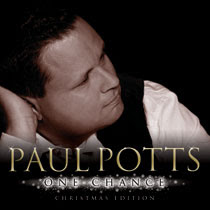 Read this Christmas Yuletide discs article on Business Times the day before. Josh Groban "Noel" album.... sure.... heard that before.
Glanced upon Paul Potts "One Chance" Christmas edition. Hmm.... so who's this? Never heard of the name before. Found it on Youtube. And his incredible rags-to-riches story was just so moving and inspiring to ordinary folks out there who are struggling to make lives meet that I knew immediately I had to post this up.
36 Year Old Opera Singing Phone Salesman from South Wales and Winner of Simon Cowell's ITV Show 'Britain's Got Talent'. A real Rags to Riches story with Paul £30,000 in debt, suffering years of bullying and recovering from a serious bike accident, he now has a massive recording contract and a great singing career ahead of him. His talent is not a secret anymore.
On His 1st Audition (watch this):
Spotted on the hit reality show Britain's Got Talent, "Singing Salesman made judge Simon Cowell's jaw drop" - was the headline from Courier Mail (now how many times have we seen that on American Idol? Not many)
A MOBILE phone salesman from Wales has stunned the judges of a British talent show with his rendition of an opera classic.
"Very few things makes me speechless. And you're one of em, Paul. An ordinary bloke, doing a normal job, very unassuming, quietly had an amazing talent. We had a vision when we do this show... that is to provide a platform so that we can show the world what they can do. And you're that guy." ex-tabloid editor Piers Morgan (1 of the 3 judges on Britain's Got Talent.
The audience and the judges including, has little expectation for this cell phone salesman, Paul Potts, until he brings them to their feet with an amazing performance of an extremely difficult opera song - Puccini’s “Nessun Dorma”. Within 2 minutes, Paul shows more emotion than all the contestants combined.
I'm not into opera but even I had to watch this video a number of times. Unbelievable voice! After watching it, how can you still judge a book by its cover?
It was a daunting prospect, not only singing for a huge TV audience, but notoriously nasty Idol judge Simon Cowell. But Potts, who has battled a burst appendix, a huge tumour on his adrenal gland and a shattered collarbone after being knocked off his bike, knocked 'em dead.
Wearing a cheap £35 suit from Tesco supermarket and with his hair cut too short, he admitted the judges weren't initially impressed.
But when he opened his voice, he blew them all away.
Potts told the Wales on Sunday newspaper: "I don't think they were expecting very much. I'm a bit short and overweight and had a cheap old suit on and the hairdresser had used a number two on my hair instead of a four so it made me look a bit bald. "But when I sang, I made sure I looked at the judges and I saw Simon Cowell's jaw drop. I knew then I must have done alright."
Paul received a standing ovation from the 2000-strong audience at Cardiff's Millennium Centre and much praise from the hard-to-please judges, which included ex-tabloid editor Piers Morgan and actress Amanda Holden.
On His Semi-Final (watch this):
"I heard some of the audience were reduced to tears after my performance and Amanda has been quoted as saying the hairs on her neck stand up when she remembers it," Potts said. "As far as Im concerned, that's a great achievement already, anything else is a bonus. I just saw the show as my last chance really."
Potts was raised in Fishponds, Bristol, by his father Roland, a bus driver, and mother, Yvonne, a supermarket cashier. He has 2 brothers and 1 sister, and attended St. Mary Redcliffe school where he first developed his love of singing.
In the interview that was broadcast before his performance in the semi-final, Paul stated that he had trouble with being bullied in school, and that it may have had an influence on his lack of self-confidence.
On His Final (watch this):
Extracted from 20 June 2007 - from Daily Mail
He performed a full-length Nessun Dorma for his final on June 17, 2007 as well as an encore after he won the competition. Potts defeated co-favourite with the bookmakers, Connie Talbot and received the highest public vote out of 2 million votes cast to win Britain's Got Talent, winning the chance to perform at Royal Variety Performance in front of the Queen.
"I vividly remember that doing that first audition in my cheap £35 Tesco suit and seeing Simon Cowell sitting there in his Armani," he added.
"I don't think I'll ever wear it again but it will always be a reminder of where I was and where I attempt to remain - except in better clothes.
"I'm wearing a Burton suit today and I expect to continue buying Burton. I'm not hung up on labels, or being seen in the right shops and the right clubs.
"I'm not going to be part of that crowd - I've no intention of being one of these people that has labels here, labels there, with artificial tendencies and caught up in superficial things. I don't think I'll ever be that Hollywood person.
"I'm not going to change who I am. I want to remain an Everyman.
"All of this stuff that's happening now is just mind-blowing, it's crazy. But all the support I've had - from the people I've worked with or sold mobile phones to, to the general public as a whole - has been so humbling.
"I still can't believe it. I keep waiting for someone to pinch me and say, 'Wake up, Paul, it's time for work - you're late again'."
Potts, who toasted Sunday night's success with a glass of champagne and two swigs from a bottle of beer, has yet to hand in his notice with the Carphone Warehouse where he has worked for the past two years.
Instead, he is due back at work on Friday. Julie, his wife of 4 years, meanwhile, is already back working at the call centre in Port Talbot where the couple share a small, two-bedroom home.
Since winning the final of Britain's Got Talent, which was watched by over 12 million viewers, Potts is set to sign a recording contract with Cowell's label, Sony Bmg.
His remarkable rise to worldwide popularity may be attributed to his humble demeanor and "rags to riches" success.
"I'd like to deal with the teeth because I do feel very self-conscious about them," he told the Mail.
"It'd be nice to feel less self-conscious and to be able to smile with confidence."
See Paul's website.
Sunday, November 04, 2007
Saturday, July 14, 2007
A Heart, Treasured & Divided
In this life, we're all pulled in different directions. You know what I mean. In the office, several emails enboldened "Urgent" beckons for your attention. Your handphone is ringing. Your best friend just broke up with her boyfriend and needs a crying shoulder and a listening ear. Your colleague passes you a stack of backlog documents to clear. When you reached home, your mom reminded you of the letters accumulated over the last few days. CPF and bank statements, handphone and credit card bills, GSS promotions, reservist call-ups.... And you know what, it never ends.... in fact, it gets more.... it all piled up. There's no escaping from this endless items that 'demands' your immediate attention. Thats why they say, multi-tasking is not an option... anymore. Even our job nature is no longer like that of the days of our grandparents or even parents. No longer we can be skilled in just one area of expertise and believe it will get us by. It doesn't work that way. Having knowledge a single financial product is not enough.... stocks, bonds, equity-linked notes, warrants, CFDs, interest-rate derivatives.... sometimes you wonder why God doesn't put more GBs in your memory and install an insatiable thirst for life in your hard disk to 'fulfil' your duties as a dilligent worker, dependable friend, obedient child and a dedicated church member. How come you feel tired of all this, you wonder? If God come to give life in abundance, how come that zest never seems to stay? Why aren't people consistent with what they say vs what they do? No wonder it's hard to trust people words. It's just that people fail to live up to their promises and expectations. They say one thing and do another. We're living in a world marked with confusion and busyness that in the words of Pukitzer Prize winning author Anna Quindlen, "it is so easy to exist instead of live."
Overheard one day in an office cubicle at 10pm, "Daniel, can you send my DNA to one of those U.S Genetics Lab. I need a clone to finish all the work that I have to do!"
Why do you have mood swings? How come you can be so enthusiastic over something and lose all interest the next moment? How come you can be so crazy over a person one minute and the waters become so mysteriously still the next?
It's no wonder that we've become more indecisive as the days goes by. It's hard to live a life centred on deep-seated principle and values, as advocated by Stephen Covey. You're torn between choices, each seem to be no less urgent or significant than the other. You've a BBQ gathering this weekend with classmates you haven't seen in years. But you have an evening Biblical class this Sunday. You're caught in two minds. Your heart is wrenched. God, teach me... let me have your wisdom in making the right decisions.
I wished I've been more resolute and sure of some the decisions I made. But life is such that God sometimes led you to hold His Hand and trust Him to show you the way out.
"Above all else, guard your heart". We usually hear this with the sense of "keep an eye on that heart of yours". Others may interpret that to believe our hearts are inherently evil, so they lock up their hearts and dump the key to avoid trouble and get on with living. But that isn't the spirit of that command; it says guard your heart for it is the wellspring of life, because it is a treasure and everything else depends on it. It's like God entrusting to a close friend something precious and dear to Him, "Be careful with this - it means a lot to me."
But many people doesn't think twice about guarding their hearts. We might as well leave our life savings on the seat of a car and leave the the windows unwinded - we are that careless with our hearts. Ray Orbison sang, "If not for my careless heart". My faith would be much deeper. My relationships so much better. I would be further along in my career.
All sorts of damage has been done to your heart over the years, all sorts of terrible things taken in. How many times have you said to yourself, "Ya, I should've known better". "Hope deferred makes the heart sick" (Proverbs 13:12). Certainly there's disappointments in your life. "Even in laughter the heart may ache" (Proverbs 14:13), which is to say, things may look rosy on the outside but on the inside, it's in turmoil.
We're told to "trust in the Lord" with all our hearts (Proverbs 3:5) but honestly, we find it hard to do. Does trust come easily for you? Oh, I would love to trust God wholeheartedly. How I wish we can all do that, wholeheartedly, without a hint of doubt or uncertainty. Why is it almost second nature to worry about our career, our future, our life? Then we also told to love one another deeply, "from the heart" (1 Peter 1:22), but that's even more rare. Why is it so wasy to get angry at, ot to resent, or simply grow apathetic towards the very people we once loved? The answers lie in the recesses of our hearts. "For it is with your heart that you believe," Paul says in Romans 10:10. Proverbs 20:5 read "The heart of a man is lke deep water, but a man of understanding draws it out." Our deepest convictions - the ones that really shape our lives - are down there somewhere at the bedrock of our hearts.
I expect all of us at one time or another have said," Well part of me wants to, and another part of me doesn't." You know the feeling - part of you pulled east, part of you pulled west. Part of me enjoys writing and genuinely looks forward to sharing life's little excerpts and insights. But not all of me. Sometimes I'm also afraid of it. Part of me fears that I will fail to deliver up to expectations, simply stating what's painfully obvious without adding any value whatsoever, or saying something incoherent. I'm drawn to it, and I also feel ambivalent about it. Come to think of it, I feel that way about a lot of things. Part of me wants to go all out and explore the world, take the risks, dive in, enjoy what life has prepared for me. Part of me wants to stay with the familar, feel safe and secure. One part says, "Stay away - you'll get hurt". Another part says, "Maybe God is going to come through for me." Yet another voice rises up and echoes, "You're on your own."
Don't you feel sometimes like your heart is divided? Don't you hate the feeling of not knowing what the future entails? No wonder fortune-tellers and psychic is a never dying trade, highly sought after by the masses. Sometimes, don't you wished you had been more decisive and more of a risk-taker?
Take your little phobias? Why are you afraid of heights or flying cockroaches or intimacy or public speaking? All the preaching and convincing wouldn't get you to jump off a bridge attached to a bungee rope, share your testimony on the pulpit on Sunday. Why do you hate it when people touch you or criticize you? And what about the little idiosyncrasies you simply can't give up to save your life? Why are you obsessed with the dirt in your house? Why do have to work so many hours? Why do you get irritated at these questions? You won't step out of your house unless you are satisfied by what you see in the mirror. Other women don't mind being seen in their grubbies. You clean and organize; you demand perfection - did you ever wonder why?
A war is constantly waged within our hearts, the new one and the old nature. Part of me doesn't want to love my 'neighbour', not when she bad-mouthed me to my bosses. Part of me knows that prayer is essential; another part of me would rather turn on the TV and tune in to my favourite show. And that whole chunk about long-suffering - No Way! Part of me just want to stay within my comforts. It's my battle with the flesh. We all know that battle well. And it's personal. Your friends can't fight it for you. Your pastors can offer counsel. How much do you want to win it?
When we say,"Well, part of me wants to and part of me doesn't", there's something else we are describing here.... everything is going well for you, and then - boom. Something suddenly brings you to tears or brings your blood to boil, makes you depressed or anxious and you cannot say why.
I'll tell you why. We are not wholehearted.
When Isaiah talks about the brokenhearted, it is not a metaphor. In Hebrew, it is leb shabar (leb for "heart", sharbar for "broken"). Isaiah uses the word shabar to describe a bush whose "twigs are dry, they are broken off" (Isaiah 27:11). God is saying this, "Your heart is now in many pieces. I want to heal it."
The heart can be broken - literally. Minds can be broken - or what are mental instituitions for? Will can be broken too. When you see pictures of P.O.W, their eyes are downcast; something in them is defeated. They will do whatever they are told. Perhaps we have overlooked the fact that this treasure called the heart can also be broken, has been broken and now lies in pieces. When it comes to habits we cannot quit or patterns we cannot stop, anger that flies out of nowhere, fears we cannot overcome or weaknesse swe hate to admit - much of what troubles us comes out of broken places in our heart crying out for relief.
Was watching Protege today; a film about the drug supply chain and it also illustrates the struggle of a pair of husband-wife drug addicts to kick their habit. They, too are torn between indulging in the high of a dose and then waking up next day penniless with no food to eat vs taking the hard route to breaking free of the craving once and for all. It's a physical and mental torment between taking on a new life and letting go of the past. The squirming, quivering, it's painful just watching it. But the problem is they can't help themselves.They are prisoners of their minds. The wife needs someone to tie up her arms and legs when the unbearable withdrawal symptoms sets in.
The lead actor, an undercover agent working for a heroin wholesaler, gave this comment at both the start and end of the movie, "Why do people take drugs? After the deaths of Fen and Kun I finally realise. It's because of emptiness in their hearts. So which is worse? The drugs or the emptiness?"
You decide.
Sunday, June 17, 2007
Life's a Story
Life, if you'll notice, is a story. It comes to us the way a story does, scene by scene. You don't get to know it in advance - you have to enter, take the journey as it unfolds. It might be raining. There's a traffic jam. Your friends might call you out to chill. You might lose your job.
Life unfolds like drama. Each day has its own beginning and an end. There's all sorts of characters, all sort of settings. When one chapter closes, another begins. Sometimes, it feels like an adventure. Sometimes, a tragedy. Other times, a comedy or soap opera.
When it comes to figuring out this life you're living, you would do well to know the rest of the story. If you want to get to know someone, you need to know their story. Their life is a story. It, too unfolds in a series of scences over the course of time. Why is Grandpa so grumpy over us watching Japanese love dramas? Well, he's a P.O.W during the Japanese Occupation and while he was there, he saw some things he has never been able to forget.
I expect all of us, at one time or another, in an attempt to understand our lives or discover what we ought to do with ours, have gone to someone else with our stories. "Tell me what happened. Tell me your story and I'll try to help you make sense of it."
We humans share these lingering questions: "Who am I really? Why am I here? Where will I find life? What does God want of me? Where does it come from? This quest. This thirst. The need to solve life's mysteries with the simplest of questions. What is the soul? Why do we dream? Perhaps we are better off not looking at all. Not doubting. Not yearning. But there's not human nature... not the human heart. The answers to these questions seem to arrive only when we know the rest of the story. As Neo said in Matrix Reloaded," I just wish I knew what I'm supposed to do." If life is a story, what is the plot? What's your role to play? It would really be good, wouldn't it? What's this all about?
In most train stations and shopping malls, you can find a huge map with a big red star indicating 'You are here'. The maps offer vistors an orientation of their, more often than not, unfamiliar surroundings. Ahhh... so this is where you're in that picture. Hopefully you now know where to go. You have your bearings.
Doesn't it sound like something in our lives? "This is the story in which you found yourself in. Here's how it got started. Here's where it went wrong. Here's what will happen next. Now this - this is the role you've been given. If you want yo fulfil your destiny, this is what you must do. These are your cues. And here's how things are going to turn out in the end."
We can... we can discover the Story. Maybe not with perfect clarity and details... but some clarity would worth something... at least better than having nothing at all. What exactly are you clear on these days? How about your life - why have things gone the way they have? And do you know what you ought to do next, with a deep conviction and confidence that it will work out? Neither do I. I would love to wake up each morning knowing exactly who I am and where God's taking me. Zeroed in on all my relationships and undaunted in my calling. It's wonderful when I do see. But for most of us, life seems more like driving along a highway with a grimy windshield. I can sort of make out the shapes ahead and I think the light's green. You may know your destination but accidents do happen when fate deals you a bad card. Then one fine day, you realise not all things are within your control, just because you kept to the rules of the game. You can still be penalised for things you didn't commit.
We all share the same dilemma - we long for life and we're not sure where to find it. Our days spent on this earth come to us as a riddle, and answers aren't readily available. We must journey to find the life we prize. And the guide we have been given is the desire set deep within. The greatest life tragedy is to simply give up the search. To lose heart is to lose everything. There is a desire within each of us, in the deep centre of ourselves we call our heart. We are born with it, it is never satisfied, and it never dies. We're often unaware of it, but it is always awake... Our true identity, our reason for being, is to be found in this desire.
The clue to who we really are and why we're here comes to us through our heart's desire.
Tuesday, February 20, 2007
Making Sense of Destiny
Man is a narcissistic species by nature. We have colonized the four corners of our tiny planet. But we are not the pinnacle of so-called evolution. That honor belongs to the lowly cockroach. Capable of living for months without food. Remaining alive headless for weeks at a time. Resistant to radiation. If God has indeed created Himself in His own image, then I submit to you that God is a cockroach. They say that man uses only a tenth of his brain power. Another percent, and we might actually be worthy of God's image. Unless, of course, that day has already arrived. The Human Genome Project has discovered that tiny variations in man's genetic code are taking place at increasingly rapid rates. Teleportation, levitation, tissue regeneration. Is this outside the realm of possibility? Or is man entering a new gateway to evolution? Is he finally standing at the threshold to true human potential?
In this world we live in, the only constant is change. Only when we learn to cope with life's changes, can we adapt, learn, evolve and ultimately survive.
Sometimes questions are more powerful than answers. How is this happening? What are they? Why me and not others? Why now? What does it all mean? Is life really about making money, procreation and leaving a legacy?
Where does it come from, this quest? This need to solve life's mysteries, when the simplest of questions can never be answered. Why are we here? What's our purpose, if not to be born, to live, to study, to work, have a family, fall sick and die? What is the soul? Why do we dream? Perhaps we'd be better off not looking at all. Not doubting, not yearning. Just accepting. But that's not human nature. Not the human heart. That is not why we are here. To be curious, always. Inquisitive about the meaning of life. That's human nature.
You do not choose your destiny, it chooses you. And those that knew you before Fate took you by the hand cannot understand the depth of the changes inside. They cannot fathom how much you stand to lose in failure...that you are the instrument of flawless Design. And all of life may hang in the balance. The chosen One learns quickly who can comprehend and who merely stands in your way.
The Earth is big. Big enough that you think you can hide from anything. From Fate. From God. If only you found a place far enough away. So you run. To the edge of the Earth. Where all is safe again. Quiet, and warm. The solace of salt air. The peace of danger left behind. The luxury of grief. And maybe, for a moment, you believe you have escaped.
We are, if anything, creatures of habit. Drawn to the safety and the comfort of the similar. But what happens when the familiar becomes unsafe? When the fear that we've been desperately trying to avoid, finds us where we live?
In the beginning there was discovery. A confusion of elements. The first snowfall of impossible change. Old lives undone, left behind. Strange faces, made familiar. New nightmares, to challenge sleep. New friends, to feel safe with. Only then comes control. To feel safe and secure among familiar souls while we make sense of the chaos that's going on around us. Violence, school gunning, suicide bombs, floods, hunger, global warming and terrorism. I think, most of us, deep down, is sensing something's not quite right with this planet. The need to impose order unto chaos, through familiarity through determination, through study, through struggle. All in defiance of a thundering truth, they’re here. And the earth shudders underfoot.
To destiny. May we recognize it when we see it.
Sunday, January 07, 2007
So What's Your Response?
As you read this blog, try to stand apart from yourself. Project your consciousness upward into a corner of the room and see yourself, staring at the computer screen. Can you look at yourself as though you were someone else?
Now think about the mood you are now in. Can you identify it? How are you feeling? What's your current state of mind?
Your ability to do what you just did is uniquely human. Animals do not possess this ability. "Self-awareness" or the ability to think about your very thought process, is the reason why Man rules the world and not apes. This is why we can evaluate and learn from others' experiences as well as our own. This is also why we can make or break our habits. If you are a fan of "Terminator" trilogy movies, you would have known that the machines took over the world the day they became 'self-aware'.
Self-awareness enablese us to stand apart and examine the way we "see" ourselves and this world we live in - our self-paradigm, is the most fundamental paradigm of effectiveness. It affects not only our attitudes and behaviours, but also how we see other people. Until we take how see ourselves and others, we will be unable to understand how others see amd feel about themselves and the way they see this world. Unaware, we will project out intentions on their behaviour and call ourselves " objective". This significantly restrict our potential and ability to relate to others.
There are 2 major paradigms: 1) Environment or Condition-based (REACTIVE) and 2) Reality or value-based (PROACTIVE).
1) We are who we're today is largely determined by what happened to us in our childhood and past experiences, inherited through genes and present environment (someone or something in your environment is responsible for your condition). The basic idea behind this REACTIVE theory is that we are conditioned to respond in a particular way to a certain stimulus.
STIMULUS ==> RESPONSE
2) We are who we are today is largely because of how we run our lives. It shifts the responsibility of the REACTIVE theory (of how our environment shapes us) to 'we are responsible' for our own lives'. Our behaviour is a direct result of the choices, decisions we made for ourselves. We have the initiative, responsiblity and power to make things happen, turn things around.
Victor Fankl is a good example of a person possessing this proactive mentality. Frankl is a psychiatrist and a Jew being held capitve in the death camps of Nazi Germany, where he had seen and experienced things so repulsive and inhuman that we shudder to repeat them. One day, naked and alone in a small cell lock-up, he begin to become aware of the "last of human freedom" - freedom his Nazi tormentors couldn't take away from him. He could decide within himself how this was going to affect him. He has empower himself instead of allowing what has happened to him take control. In the midst of his experiences, Frankl help others find meaning in their suffering and dignity in their 'living-hellish' prison existence.
Between stimulus and response, man has the freedom to choose.
Highly proactive people recognize that responsibility. They do not blame circumstances, conditions or conditioning for their behaviour. Their behaviour is a product of their own conscious choice, based on values, rather than a product of their conditions which is based on feeling. Unlike reactive people, proactive people choose NOT to empower their environment to control them.
Difference bet. Reactive and Proactive People
Reactive people are often affected by their physical environment. If the weather is good, they feel good. If it isn't, it affects their attitude and performance. Proactive people carry their own weather with them. Whether it rains or shines makes no difference to them. They are value-driven and if their value is to produce good quality work, it isn't a function of whether the weather is conducive ot not.
Reactive people are also affected by their social environment, by the 'social weather'. When people treat them well, they feel well; when people don't, they become defensive and protective. Reactive people build their emotional lives around the behaviour of others, empowering the weaknesses of other people to control them.
Reactive people are driven by feelings, by circumstances, by environment and by what happened to them. Proactive people are driven by values and principles - meticulously thought and internalized values. Don't get me wrong, proactive people are still influenced by external stimuli - physical, social or psychological. But the difference is their RESPONSE to the stimuli
It is a value-based choice.
Eleanor Roosevelt said, "No one can hurt you without your consent."
In the words of Gandhi, "They cannot take away our self-respect if we do not give in to them."
It is our willing permission, or consent to what happens to us, that hurts us far more than what happens to us in the first place.
Until a person can say honestly and responsibly, "I am who I am today because of the choices I made yesterday," that person cannot say, "I choose otherwise." because each of us has a responsibilty to face the result of the decisions we made in the past, be it right or wrong.
Now think about the mood you are now in. Can you identify it? How are you feeling? What's your current state of mind?
Your ability to do what you just did is uniquely human. Animals do not possess this ability. "Self-awareness" or the ability to think about your very thought process, is the reason why Man rules the world and not apes. This is why we can evaluate and learn from others' experiences as well as our own. This is also why we can make or break our habits. If you are a fan of "Terminator" trilogy movies, you would have known that the machines took over the world the day they became 'self-aware'.
Self-awareness enablese us to stand apart and examine the way we "see" ourselves and this world we live in - our self-paradigm, is the most fundamental paradigm of effectiveness. It affects not only our attitudes and behaviours, but also how we see other people. Until we take how see ourselves and others, we will be unable to understand how others see amd feel about themselves and the way they see this world. Unaware, we will project out intentions on their behaviour and call ourselves " objective". This significantly restrict our potential and ability to relate to others.
There are 2 major paradigms: 1) Environment or Condition-based (REACTIVE) and 2) Reality or value-based (PROACTIVE).
1) We are who we're today is largely determined by what happened to us in our childhood and past experiences, inherited through genes and present environment (someone or something in your environment is responsible for your condition). The basic idea behind this REACTIVE theory is that we are conditioned to respond in a particular way to a certain stimulus.
STIMULUS ==> RESPONSE
2) We are who we are today is largely because of how we run our lives. It shifts the responsibility of the REACTIVE theory (of how our environment shapes us) to 'we are responsible' for our own lives'. Our behaviour is a direct result of the choices, decisions we made for ourselves. We have the initiative, responsiblity and power to make things happen, turn things around.
STIMULUS ==> FREEDOM TO CHOOSE ==> RESPONSE
(Self-Awareness, Imagination, Conscience, INdependent Will)Victor Fankl is a good example of a person possessing this proactive mentality. Frankl is a psychiatrist and a Jew being held capitve in the death camps of Nazi Germany, where he had seen and experienced things so repulsive and inhuman that we shudder to repeat them. One day, naked and alone in a small cell lock-up, he begin to become aware of the "last of human freedom" - freedom his Nazi tormentors couldn't take away from him. He could decide within himself how this was going to affect him. He has empower himself instead of allowing what has happened to him take control. In the midst of his experiences, Frankl help others find meaning in their suffering and dignity in their 'living-hellish' prison existence.
Between stimulus and response, man has the freedom to choose.
Highly proactive people recognize that responsibility. They do not blame circumstances, conditions or conditioning for their behaviour. Their behaviour is a product of their own conscious choice, based on values, rather than a product of their conditions which is based on feeling. Unlike reactive people, proactive people choose NOT to empower their environment to control them.
Difference bet. Reactive and Proactive People
Reactive people are often affected by their physical environment. If the weather is good, they feel good. If it isn't, it affects their attitude and performance. Proactive people carry their own weather with them. Whether it rains or shines makes no difference to them. They are value-driven and if their value is to produce good quality work, it isn't a function of whether the weather is conducive ot not.
Reactive people are also affected by their social environment, by the 'social weather'. When people treat them well, they feel well; when people don't, they become defensive and protective. Reactive people build their emotional lives around the behaviour of others, empowering the weaknesses of other people to control them.
Reactive people are driven by feelings, by circumstances, by environment and by what happened to them. Proactive people are driven by values and principles - meticulously thought and internalized values. Don't get me wrong, proactive people are still influenced by external stimuli - physical, social or psychological. But the difference is their RESPONSE to the stimuli
It is a value-based choice.
Eleanor Roosevelt said, "No one can hurt you without your consent."
In the words of Gandhi, "They cannot take away our self-respect if we do not give in to them."
It is our willing permission, or consent to what happens to us, that hurts us far more than what happens to us in the first place.
Until a person can say honestly and responsibly, "I am who I am today because of the choices I made yesterday," that person cannot say, "I choose otherwise." because each of us has a responsibilty to face the result of the decisions we made in the past, be it right or wrong.
Subscribe to:
Posts (Atom)